
Did you know the average American homeowner spends over 30% of their monthly income on housing? Bankrate highlights the importance of understanding monthly mortgage payments for financial planning. A home loan calculator is essential for estimating these costs.
A mortgage calculator empowers you to make informed decisions about buying a home. This article will guide you through the process of understanding mortgage payments. It will also show you how to use a mortgage payment calculator and plan your finances effectively.
Key Takeaways
- Understand how to estimate your monthly mortgage payments.
- Learn how to use a home loan calculator for financial planning.
- Discover the importance of considering all costs associated with homeownership.
- Find out how to adjust your mortgage terms for better financial outcomes.
- Get tips on using a mortgage calculator to make informed home buying decisions.
Understanding Mortgage Payments
Several factors influence your mortgage payments, shaping your monthly costs. Grasping these elements is key for effective financial management.
What Makes Up Your Monthly Payment
Your mortgage payment includes four main parts: principal, interest, property taxes, and insurance. The principal is the loan amount, and interest is the borrowing cost. Property taxes and insurance, known as PITI, are also part of your monthly payment. Bankrate explains that these costs are usually included in your mortgage payment.
How Lenders Calculate Your Payment
Lenders employ a mortgage amortization calculator to figure out your monthly payment. This tool considers the loan amount, interest rate, and term. They also factor in property taxes and insurance for the total monthly cost. A mortgage interest calculator helps borrowers see how much goes to interest versus principal.
Understanding mortgage payment calculations empowers homeowners to manage their finances better. It aids in making informed mortgage decisions.
Source: Bankrate Mortgage Calculators
What Is a Mortgage Calculator and Why Use One
Mortgage calculators are essential for homebuyers, aiding in the complex loan process. They estimate monthly payments based on loan amount, interest rate, and term. This tool is vital for understanding financial commitments.
Benefits of Using Mortgage Calculators
Online mortgage calculators offer significant advantages. They enable users to compare various loan options, assess affordability, and plan finances. According to Bankrate, these tools help users grasp the impact of interest rates and loan terms on monthly payments. This comparison can lead to significant savings over the life of the loan.
They also allow for easy adjustments to variables, showing how different factors influence monthly payments. This is invaluable for those considering a mortgage refinance, helping them decide if it’s a good option.
| Benefits | Description |
|---|---|
| Compare Loan Scenarios | Understand how different interest rates and loan terms affect monthly payments. |
| Financial Planning | Plan finances by estimating monthly mortgage payments. |
| Refinancing Decisions | Determine if refinancing a mortgage is beneficial based on current interest rates. |
Limitations of Online Calculators
Despite their usefulness, mortgage calculators have limitations. They often overlook additional costs like property taxes and insurance. Bankrate notes that some calculators might exclude these, leading to inaccurate estimates.
The accuracy of these calculators also hinges on the input data. Incorrect or outdated information can yield misleading results. It’s critical to use reliable, current data with a best mortgage calculator.
https://www.youtube.com/watch?v=T8YCynkp02Y
For more detailed information on using mortgage calculators effectively, you can visit Bankrate’s Mortgage Calculator.
Essential Information You’ll Need for Calculations
Before diving into a mortgage calculator, it’s vital to grasp the essential information needed for precise calculations. Having the correct data ensures an accurate monthly mortgage payment estimate.
Loan Amount and Down Payment
The loan amount is the total borrowed sum, while the down payment is the initial payment made. The loan amount is derived by subtracting the down payment from the home’s purchase price. For instance, a $300,000 home with a 20% down payment ($60,000) results in a $240,000 loan amount.
Interest Rate
The interest rate represents the annual percentage of your loan amount paid as interest. It’s a key determinant of your monthly mortgage payment. Current interest rates can be found on financial websites like Freddie Mac or Bankrate.
Loan Term
The loan term signifies the repayment duration of your mortgage. Common terms include 15 or 30 years. A longer term results in lower monthly payments but more interest over the loan’s life. Here’s a comparison:
| Loan Term | Monthly Payment | Total Interest Paid |
|---|---|---|
| 15 Years | $1,479 | $66,288 |
| 30 Years | $1,073 | $143,739 |
Step-by-Step Guide to Using a Mortgage Calculator
Using a mortgage calculator is a straightforward process. It helps you estimate your monthly mortgage payments. By following a few simple steps, you can get a clear picture of what to expect.
Entering Your Loan Details
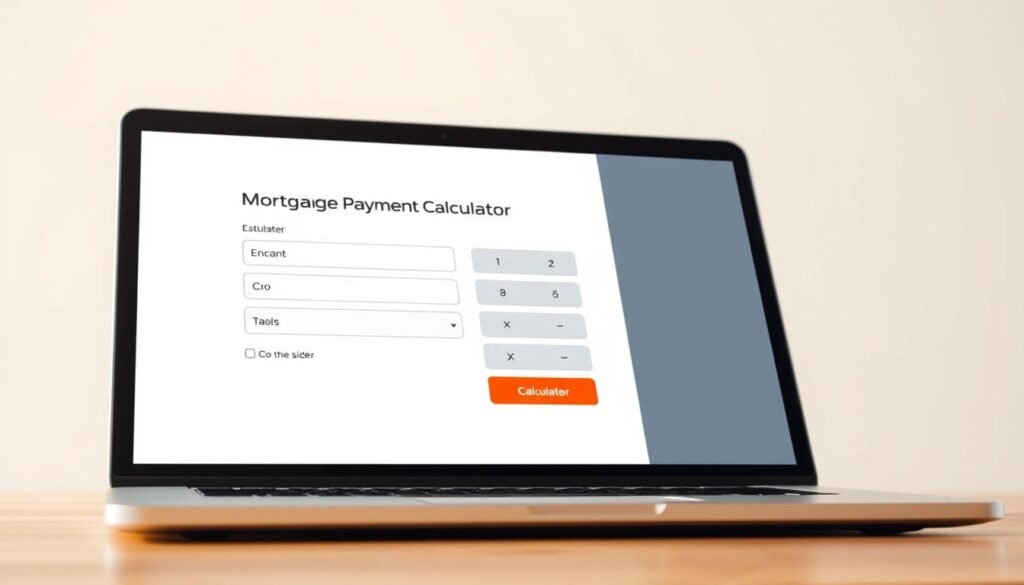
To start, you’ll need to enter some basic information about your loan. This includes the loan amount, interest rate, and loan term. This information will help the calculator determine your monthly payment. For instance, if you’re using a mortgage payment calculator, you’ll typically need to input the purchase price of the home, the down payment, and the loan term.
Including Taxes and Insurance
In addition to your loan details, you’ll also need to factor in other costs. These include property taxes and insurance. These costs can significantly impact your monthly payment. A good mortgage affordability calculator will take these costs into account.
Understanding the Results
Once you’ve entered all the necessary information, the calculator will provide you with an estimate. This estimate will include principal, interest, taxes, and insurance (PITI). Understanding the results will help you determine whether you’re comfortable with the monthly payment.
Adjusting Variables to See Different Scenarios
One of the benefits of using a mortgage calculator is the ability to adjust variables. This lets you see how different scenarios impact your monthly payment. For example, you can use a refinance calculator to see how refinancing your loan could lower your monthly payment.
| Variable | Original Value | Adjusted Value | Impact on Monthly Payment |
|---|---|---|---|
| Interest Rate | 4% | 3.5% | $100 decrease |
| Loan Term | 30 years | 20 years | $50 increase |
For more information on using mortgage calculators, you can visit Bankrate’s Mortgage Calculator.
Types of Mortgage Calculators
Mortgage calculators are not a one-size-fits-all solution; they vary to address specific home loan aspects. Knowing these differences helps you pick the right one for your needs.
Basic Payment Calculators
Basic payment calculators calculate your monthly mortgage payment. They use the loan amount, interest rate, and term to provide a clear monthly financial commitment.
Affordability Calculators
Affordability calculators help figure out how much house you can afford. They consider your income, expenses, and other financial factors for a detailed assessment.
Refinance Calculators
Refinance calculators are for those considering refinancing their mortgage. They show the benefits, like lower payments or a shorter term.
Amortization Calculators
Amortization calculators break down your loan payments over time. They detail how each payment affects your equity, showing how it grows.
Biweekly Payment Calculators
Biweekly payment calculators explore the benefits of biweekly payments. This can save a lot on interest over the loan’s life.
Using these mortgage calculators helps you understand your options better. This way, you can make informed decisions about your home financing.
For more details on mortgage calculators and their uses, check out financial websites like the Consumer Financial Protection Bureau or Fannie Mae.
Using Mortgage Calculators for Different Loan Types
Grasping the use of mortgage calculators for various loan types is essential for smart homebuying decisions. These tools are invaluable for estimating monthly payments based on loan specifics. They help borrowers understand their financial commitments.
Fixed-Rate Mortgage Calculations
For fixed-rate mortgages, calculators offer a clear view of monthly payments. They consider the loan amount, interest rate, and term. This clarity is key for long-term financial planning.
Adjustable-Rate Mortgage Calculations
Adjustable-rate mortgages present a challenge due to rate fluctuations. Calculators allow borrowers to explore different scenarios. This helps them anticipate future payments with more confidence.
FHA, VA, and USDA Loan Calculations
Government-backed loans, like FHA, VA, and USDA loans, have distinct features. FHA loans require mortgage insurance, while VA loans offer special benefits for veterans. Calculators specific to these loans provide more precise estimates.
| Loan Type | Key Characteristics | Calculator Considerations |
|---|---|---|
| Fixed-Rate Mortgage | Constant interest rate, predictable payments | Loan amount, interest rate, loan term |
| Adjustable-Rate Mortgage | Variable interest rate, possible rate changes | Initial rate, adjustment frequency, rate caps |
| FHA Loan | Lower down payment, mortgage insurance premiums | Loan amount, interest rate, mortgage insurance |
| VA Loan | Favorable terms for veterans, no down payment | Loan amount, interest rate, VA funding fee |
| USDA Loan | Zero down payment, income and location restrictions | Loan amount, interest rate, guarantee fee |
By leveraging mortgage calculators specific to their loan type, borrowers can better grasp their financial obligations. This knowledge empowers them to make more informed decisions.
How to Interpret Amortization Schedules
An amortization schedule offers a detailed look at your mortgage payments, aiding in informed financial choices. It shows how each payment is split between principal and interest. This clarity is key for effective mortgage management.
Understanding Principal vs. Interest Payments
In the mortgage’s early years, most of your payment covers interest, with a smaller part going to the principal. As payments continue, the ratio changes, favoring the principal. Grasping this shift is essential for managing your mortgage well.
Tracking Your Equity Growth Over Time
An amortization schedule also tracks your property’s equity growth over time. As you reduce the principal, your equity increases, making your property more valuable. This is critical for homeowners considering refinancing or selling.
The Impact of Extra Payments
Extra payments can greatly influence your amortization schedule. By paying more than the monthly minimum, you shorten your loan term and cut interest costs. Always confirm with your lender that extra payments are correctly applied to your principal.
For a deeper dive into amortization schedules and extra payments, Bankrate offers valuable insights.
Using Mortgage Calculators for Financial Planning
Mortgage calculators are more than just tools for estimating monthly payments. They are vital for thorough financial planning. By employing a mortgage affordability calculator, prospective homeowners can better understand their financial standing. This clarity enables them to make more informed decisions.
Determining Your Ideal Price Range
One key function of a mortgage calculator is to determine your ideal home price range. By adjusting loan amounts, interest rates, and terms, you can observe how these changes impact your monthly payments. This insight is critical for setting a realistic budget for your home purchase.
Budgeting for Homeownership Costs
Homeownership encompasses more than just mortgage payments. It includes property taxes, insurance, and maintenance costs. A mortgage calculator can integrate these expenses into your budget. This preparation ensures you’re financially ready for the full cost of homeownership. It’s vital to account for these costs to avoid financial stress.
Planning for Future Financial Goals
Mortgage calculators also facilitate planning for future financial goals. By grasping the structure of your mortgage payments, you can align them with other financial objectives. This might include saving for retirement or your children’s education. A long-term financial perspective is essential for maintaining financial stability.
| Financial Planning Aspect | How Mortgage Calculators Help |
|---|---|
| Determining Ideal Price Range | By adjusting loan amounts and terms to see the impact on monthly payments. |
| Budgeting for Homeownership Costs | By factoring in additional costs such as taxes and insurance. |
| Planning for Future Financial Goals | By understanding the structure of mortgage payments and their impact on long-term financial planning. |
For more detailed information on using mortgage calculators for financial planning, visit reputable financial websites. The Consumer Financial Protection Bureau and Fannie Mae offer extensive resources and tools.
Common Mistakes When Using Mortgage Calculators
To maximize the benefits of a mortgage calculator, it’s vital to steer clear of common pitfalls. Many users fall into errors that result in incorrect outcomes and suboptimal financial choices.
Recognizing these mistakes can enhance your use of mortgage calculators. Below are some prevalent errors to be mindful of.
Forgetting to Include All Costs
One major blunder is neglecting to account for all costs tied to homeownership. This includes property taxes, insurance, and upkeep expenses. To achieve an accurate calculation, it’s essential to factor in all these costs.
Using Inaccurate Interest Rates
Another frequent error is employing an incorrect interest rate. Interest rates can shift often, and using an outdated rate can skew results. Ensuring you use current rates is critical for accurate calculations.
Not Considering Future Financial Changes
Ignoring the possibility of future financial shifts is another mistake. Your financial standing can evolve, impacting your mortgage payments. It’s prudent to anticipate such changes and adjust your plans.
| Common Mistake | Description | Impact |
|---|---|---|
| Omitting Costs | Forgetting to include property taxes, insurance, and maintenance | Inaccurate monthly payment estimates |
| Inaccurate Interest Rates | Using outdated or incorrect interest rates | Inaccurate calculation results |
| Ignoring Future Changes | Not considering possible financial changes | Poor financial planning |
Avoiding these common errors can improve your use of mortgage calculators. This leads to more informed financial decisions. For detailed guidance on accurate mortgage calculator use, visit reputable sites like Fannie Mae or Freddie Mac.
Best Online Mortgage Calculator Tools
Managing your mortgage effectively requires the best online calculator. With many options available, choosing the right tool is key to estimating your monthly payments accurately.
Reliable Online Mortgage Calculators are vital for precise financial planning. They offer insights that help homeowners make informed decisions.
Free Calculator Options
Many websites provide free mortgage calculators that are easy to use and offer detailed calculations. These tools break down your mortgage payments into principal, interest, taxes, and insurance.
Calculator Apps for Mobile Devices
Mobile apps are perfect for managing your mortgage on the move. They often include features like amortization schedules and payment reminders.
“Using a mortgage calculator app can significantly simplify your financial planning process.” – Financial Expert
Lender-Specific Calculators
Some lenders offer lender-specific calculators designed for their mortgage products. These calculators provide more precise estimates, considering the lender’s specific rates and terms.
By using these online mortgage calculator tools, prospective homeowners can grasp their financial commitments better. This leads to more informed decisions.
For more details on mortgage calculators and to explore different options, visit reputable financial websites.
Conclusion
Effective financial planning is key to successful homeownership. Mortgage calculators are essential tools in this journey. They help individuals estimate monthly payments and explore different loan scenarios. This enables them to make informed decisions about their financial commitments.
Understanding how to use mortgage calculators and interpreting the results is vital. Homebuyers can then navigate the mortgage process with confidence. This knowledge allows them to budget accurately, plan for the future, and avoid financial pitfalls.
For more information on using mortgage calculators, visit reputable financial websites. The Consumer Financial Protection Bureau and Fannie Mae are excellent resources. They offer valuable insights and guidance to help individuals achieve their homeownership goals.
FAQ
What is a mortgage calculator used for?
A mortgage calculator estimates monthly mortgage payments. It considers loan amount, interest rate, and term. This tool aids in understanding mortgage obligations and financial planning.
How do I use a mortgage calculator effectively?
To effectively use a mortgage calculator, input accurate details. Include loan amount, down payment, interest rate, and term. Adjust variables to explore different scenarios for informed decisions.
What are the different types of mortgage calculators available?
There are various mortgage calculators. Basic payment, affordability, refinance, amortization, and biweekly calculators exist. Each serves a specific purpose, aiding in mortgage understanding.
Can I use a mortgage calculator for different loan types?
Yes, mortgage calculators accommodate various loan types. This includes fixed-rate, adjustable-rate, FHA, VA, and USDA loans. The right calculator helps in making informed decisions.
How do I interpret an amortization schedule?
An amortization schedule details principal and interest payments. It aids in tracking equity growth and extra payment impacts. This understanding enhances financial planning.
What are some common mistakes to avoid when using a mortgage calculator?
Avoid omitting costs, using incorrect interest rates, and neglecting future financial changes. Awareness of these pitfalls ensures effective calculator use.
Are there any free online mortgage calculator tools available?
Yes, numerous free online mortgage calculators exist. These include apps and lender-specific tools. They offer valuable insights for mortgage decisions.
How can a mortgage calculator help with financial planning?
A mortgage calculator aids in financial planning. It determines your ideal price range and budgets for homeownership. It also helps plan for future financial goals.
Can a mortgage calculator help me compare different loan scenarios?
Yes, a mortgage calculator facilitates loan scenario comparison. Adjust variables like interest rate and term to understand different options. This aids in making informed decisions.
How often should I use a mortgage refinance calculator?
Use a mortgage refinance calculator when considering refinancing. It helps understand benefits and costs. This ensures informed mortgage decisions and possible savings.