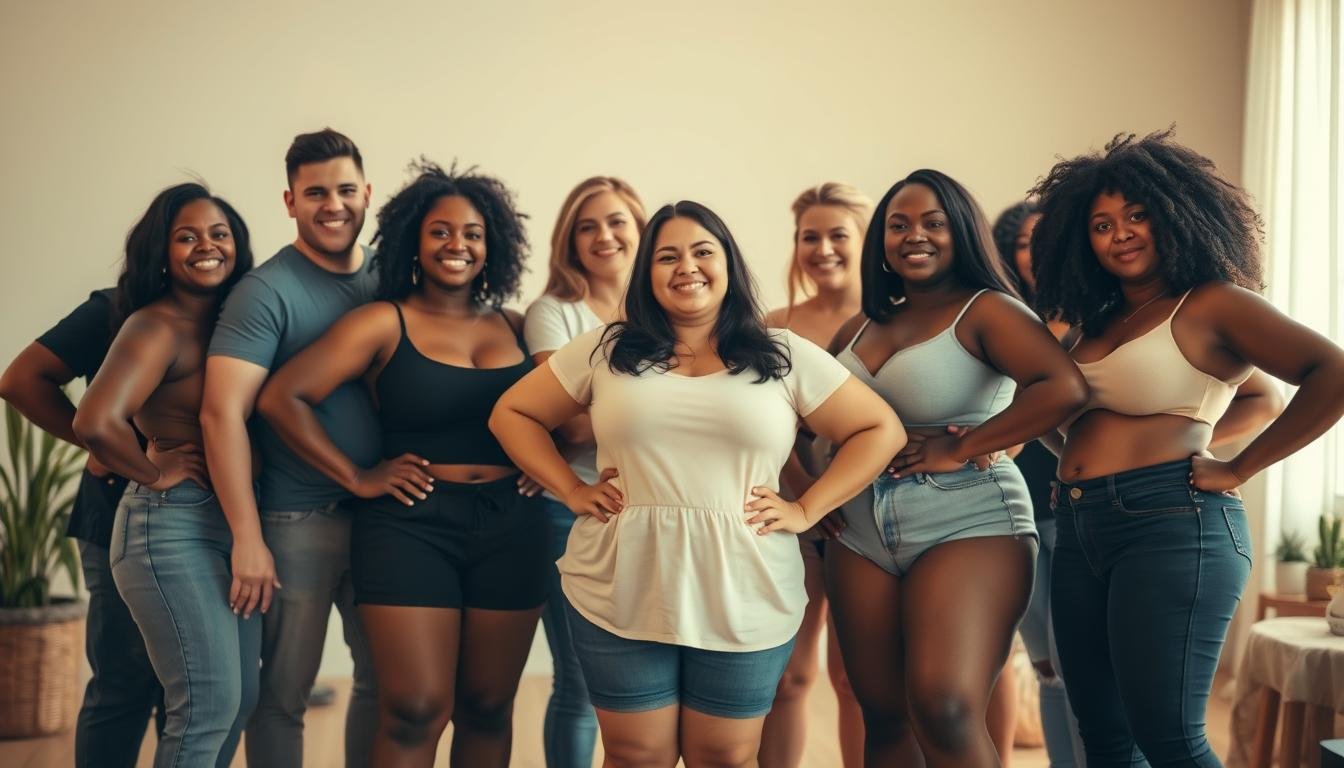
A staggering 80% of women in the United States report feeling dissatisfied with their bodies. This dissatisfaction often stems from societal pressures and unrealistic beauty standards.
The concept of body positivity has emerged as a powerful counter-movement. It encourages individuals to embrace self-love and acceptance, regardless of their shape or size.
By fostering a culture of empowerment and self-acceptance, individuals can break free from the constraints of negative body image. They can cultivate a more positive, loving relationship with themselves.
Key Takeaways
- Understanding the concept of body positivity and its significance.
- Recognizing the impact of societal beauty standards.
- Embracing self-love as a path to empowerment.
- Practicing self-acceptance to improve mental well-being.
- Cultivating a positive body image through empowerment.
Understanding Body Positivity and Its Importance
Body positivity is more than a fleeting trend; it’s a profound movement that champions self-love and acceptance. As we explore body positivity, grasping its evolution and psychological advantages is critical.
The Definition and Evolution of Body Positivity Movement
The body positivity movement traces back to the fat acceptance movement of the 1960s. It has grown, now encompassing a wider scope. It focuses on self-acceptance and self-love, regardless of body shape, size, or appearance. This movement urges individuals to embrace their bodies, challenging traditional beauty standards. It advocates for a more inclusive view of beauty.
The Psychological Benefits of Embracing Your Body
Body positivity offers significant psychological benefits, including a decrease in anxiety and depression. It promotes a positive body image, leading to enhanced mental health and overall well-being. Below, we outline some key psychological advantages of body positivity.
| Psychological Benefits | Description |
|---|---|
| Reduced Anxiety | Less worry about body image |
| Improved Self-Esteem | Enhanced confidence in one’s appearance |
| Better Mental Health | Lower risk of depression and other mental health issues |
By embracing body positivity, individuals can make substantial strides towards a healthier, more positive body image.
The Impact of Negative Body Image on Mental Health
Negative body image profoundly affects mental health, causing anxiety and depression. Our body perception greatly influences our well-being.
A negative body image fosters harmful thought patterns that erode self-worth. It’s essential to recognize these patterns to mitigate their mental health impact.
Recognizing Harmful Thought Patterns
Harmful body image-related thoughts include self-criticism, catastrophizing, and black-and-white thinking. Awareness of these patterns is the initial step towards change.
People might criticize their looks, focus on flaws, or believe their worth is tied to appearance. Identifying these thoughts is key to challenging and altering them.
The Connection Between Body Image and Self-Worth
There’s a strong connection between body perception and self-worth. A negative body image often leads to low self-esteem, impacting various life aspects.
Cultivating a positive body image means appreciating one’s body and its abilities, not just appearance. This shift boosts self-worth and mental health.
Identifying and Challenging Beauty Standards
The concept of beauty has been in a constant state of flux, influenced by cultural norms, historical context, and media representation. Understanding this dynamic nature is key to challenging unrealistic beauty standards.
The History of Changing Beauty Ideals
Beauty ideals have seen significant transformations throughout history. For example, the Renaissance celebrated fuller figures, while the 1920s flapper era idealized a more androgynous, slender form. These changes reflect the societal values and cultural norms of their times. Recognizing this historical context helps us see that beauty standards are not fixed but evolve with time.
How Media Influences Our Perception of Beauty
Media significantly shapes our perception of beauty. Through advertisements, movies, and social media, we’re constantly bombarded with images and messages defining beauty. Often, these portrayals are unrealistic and unattainable, causing unhealthy comparisons and self-criticism. It’s vital to critically evaluate the media we consume and acknowledge its impact on our beauty ideals.
Tools for Media Literacy and Critical Thinking
Developing media literacy and critical thinking skills is essential for challenging beauty standards. This involves questioning the authenticity of media portrayals, understanding biases and motivations behind advertisements, and seeking diverse representations of beauty. By doing so, we foster a more nuanced and realistic understanding of beauty, celebrating individuality and diversity.
By combining historical context, media awareness, and critical thinking, we can effectively identify and challenge prevailing beauty standards. This fosters a more inclusive and accepting definition of beauty.
The Journey to Self-Acceptance: First Steps
The first step towards self-acceptance is to shift your focus from your body’s appearance to its capabilities and strengths. This journey is about recognizing the incredible things your body can do, not how it looks.
Acknowledging Your Body’s Capabilities
Acknowledging your body’s capabilities is a powerful way to cultivate self-acceptance. Think about the daily functions your body performs, like breathing, walking, or the complex processes of digestion and circulation. Reflecting on these capabilities can help you develop a more positive body image.
Practicing Gratitude for Your Body
Practicing gratitude for your body involves focusing on its positive aspects and expressing thanks for what it can do. You can maintain a gratitude journal to record things you appreciate about your body each day. This practice helps in shifting your focus from flaws to the strengths and capabilities of your body.
| Body Part | Capability | Gratitude Reason |
|---|---|---|
| Legs | Walking, Running | Ability to move freely |
| Hands | Creating, Holding | Ability to craft and hold loved ones |
| Eyes | Seeing | Ability to witness beauty |
Setting Realistic Goals for Self-Acceptance
Setting realistic goals for self-acceptance is key for maintaining motivation and tracking progress. Begin with small, achievable goals, such as practicing daily affirmations or engaging in activities that make you feel good about your body. Celebrate your successes and be patient with yourself as you work towards self-acceptance.
Practical Exercises to Cultivate Body Positivity
To develop a more positive body image, it’s essential to incorporate specific practices into your daily routine. These exercises can help you cultivate a more loving and accepting relationship with your body.
Mirror Work and Positive Affirmations
Mirror work involves looking at yourself in the mirror and practicing positive affirmations. Start by standing in front of a mirror and saying affirmations such as “I love and accept my body exactly as it is” or “I am beautiful inside and out.” Repeating these affirmations daily can help rewire your brain to focus on the positive aspects of your body.
Tips for Effective Mirror Work:
- Start with small affirmations and gradually move to more extensive ones.
- Be consistent and make it a daily habit.
- Observe your body language and facial expressions while affirming.
Journaling Techniques for Body Acceptance
Journaling is a powerful tool for cultivating body positivity. By writing down your thoughts and feelings, you can process and release negative emotions related to your body image. Try to maintain a journal where you write positive affirmations about your body and reflect on your experiences.
Journaling Prompts:
- What are three things you appreciate about your body today?
- Write about a time when you felt confident and comfortable in your body.
- List five positive affirmations you can use daily to boost your body image.
Mindfulness Practices for Body Awareness
Mindfulness practices can help you become more aware of your body and its sensations, promoting a more positive body image. Engage in activities like meditation, deep breathing, or yoga to cultivate mindfulness.
| Practice | Description | Benefits |
|---|---|---|
| Mirror Work | Daily affirmations in front of a mirror | Boosts self-confidence, promotes positive body image |
| Journaling | Writing down thoughts and feelings about your body | Helps process negative emotions, fosters self-acceptance |
| Mindfulness | Practices like meditation and yoga | Increases body awareness, reduces stress |
By incorporating these practical exercises into your daily routine, you can cultivate a more positive body image and foster a deeper appreciation for your body.
Creating a Supportive Environment
Creating a positive space around you is key for your body positivity journey. A supportive environment greatly impacts how you see yourself and maintain a positive body image.
Curating Your Social Media Feed
Your social media feed mirrors your interests and values. To make it body-positive, follow accounts that celebrate self-acceptance, diversity, and inclusivity. Unfollow or mute those that make you feel bad about yourself or others. This way, you’ll see more positive and uplifting content, supporting your self-love journey.
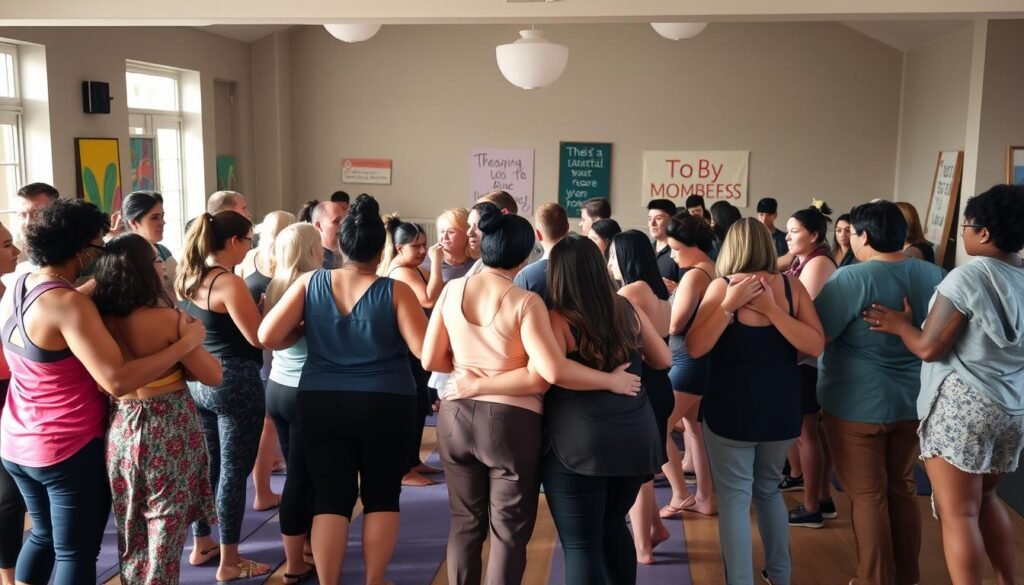
Surrounding Yourself with Body-Positive People
The company you keep can either uplift or undermine your body positivity. Look for people who support positive body image and self-acceptance. Connect with communities, online or offline, that share your values and support your body positivity journey.
Setting Boundaries with Those Who Undermine Your Journey
It’s vital to set boundaries with those who harm your body image. This might mean limiting interactions with family, friends, or colleagues who criticize your body or others’. By doing this, you protect your mental health and create a positive environment that fosters self-love and acceptance.
By using these strategies, you can build a supportive environment that nurtures your body positivity journey. This helps you develop a more positive and accepting relationship with your body.
The Role of Movement and Joyful Exercise
Viewing exercise as a source of joy, not just a means to a certain body shape, can transform one’s body image. Engaging in activities that make us happy can greatly improve our well-being and body image.
Finding Physical Activities You Genuinely Enjoy
Discovering exercises that bring joy is a personal journey. It requires exploring various activities to find what truly resonates with you. This could range from dancing and swimming to cycling and hiking, or even practicing yoga. The goal is to focus on activities that enhance both physical and mental well-being.
A study in the Journal of Sports Sciences found that enjoyable physical activities boost motivation and adherence to exercise routines. “Exercise enjoyment is a critical factor in determining exercise adherence”, underscoring the importance of finding activities that bring joy.
Shifting Focus from Appearance to Functionality
Changing your focus from how your body looks to what it can do is a powerful step towards body positivity. By highlighting functionality, you start to appreciate your body’s capabilities and strengths. This shift can lead to a more positive and respectful relationship with your body.
| Body Functionality | Benefits |
|---|---|
| Flexibility | Enhanced range of motion, reduced injury risk |
| Strength | Increased confidence, better overall health |
| Endurance | Improved cardiovascular health, enhanced stamina |
Celebrating What Your Body Can Do
Celebrating your body’s capabilities is key to body positivity. Acknowledging and appreciating what your body can do fosters a more positive and compassionate relationship with it. This involves recognizing your body’s strength, flexibility, or endurance.
“The body is capable of amazing things; it’s time we start celebrating its abilities, not just its appearance.”
Focusing on joyful exercise and body functionality can lead to a more fulfilling and positive experience. By embracing physical activities that bring joy and appreciating what your body can do, you cultivate a deeper sense of body positivity and overall well-being.
Nurturing Your Body Through Intuitive Eating
By tuning into your body’s natural hunger and fullness cues, you can break free from diet culture. Intuitive eating is an approach that focuses on developing a healthy relationship with food and your body. It’s about listening to your internal signals and honoring your needs.
Understanding the Principles of Intuitive Eating
Intuitive eating is based on several core principles. These include rejecting the diet mentality, honoring your hunger, and respecting your fullness. It involves a shift from external rules to internal cues. This allows you to develop a more positive and compassionate relationship with your body.

Recognizing Hunger and Fullness Cues
A key aspect of intuitive eating is learning to recognize and respond to your body’s hunger and fullness signals. This involves paying attention to physical sensations, not emotional or external triggers. By doing so, you can eat in a way that nourishes your body and satisfies your hunger.
Breaking Free from Diet Culture
Diet culture often perpetuates negative body image and disordered eating behaviors. Intuitive eating offers a way to break free from these harmful influences. It focuses on self-care and body acceptance. It’s about embracing your body as it is, not striving for an unrealistic ideal.
Embracing Body Positivity Through Diversity and Inclusivity
Diversity and inclusivity are the bedrock of a genuine body-positive community. By embracing these values, we can build a more supportive and accepting space for everyone. This includes individuals from all backgrounds and body types.
Acknowledging Privilege in Body Image Discussions
It’s vital to acknowledge the privilege in body image talks. Acknowledging privilege means grasping how societal beauty norms differ across cultures and economic statuses. By recognizing our own privilege, we can foster a dialogue that respects diverse experiences.
Celebrating Bodies of All Shapes, Sizes, Abilities, and Backgrounds
Celebrating diverse bodies goes beyond mere acknowledgment. It demands actively promoting their beauty and value. This can be done by:
- Sharing diverse representations in media and advertising
- Using inclusive language that avoids marginalizing certain groups
- Supporting brands that cater to a wide range of body types and needs
Supporting Body Positivity Beyond Your Personal Journey
Body positivity is a collective movement, not just a personal journey. Supporting others on their path to self-acceptance involves:
- Advocating for body-positive policies and practices in your community
- Engaging in conversations that challenge traditional beauty standards
- Participating in or supporting initiatives that promote body diversity and inclusivity
Together, we can create a culture that values and celebrates all bodies.
Overcoming Setbacks on Your Body Positivity Journey
The path to body positivity is rarely linear, and setbacks are an inevitable part of the process. As you navigate this journey, it’s essential to develop strategies for overcoming obstacles and maintaining resilience.
Dealing with Bad Body Image Days
Bad body image days are a normal part of the body positivity journey. On these days, practicing self-compassion and acknowledging your emotions can help. Engage in activities that promote positive body image, such as reading body-positive literature or following affirming social media accounts.
Strategies for Resilience When Facing Criticism
Facing criticism can be challenging, but developing resilience is key. Focus on building a support network of positive influences, and practice assertive responses to negative comments. Remember, criticism often reflects the critic’s own biases and insecurities.
“The most courageous act is to think for yourself. Aloud.”
When to Seek Professional Support
Recognizing when to seek professional help is critical. If negative body image thoughts are impacting your daily life or mental health, consider seeking support from a mental health professional. They can provide personalized guidance and support to help you navigate challenging times.
- Identify your triggers and develop coping strategies.
- Practice self-care and prioritize your mental health.
- Surround yourself with positive influences and support.
By acknowledging the possibility of setbacks and developing strategies for resilience, you can continue to make progress on your body positivity journey.
Conclusion: Embodying Self-Love as a Lifelong Practice
Embracing self-love is a lifelong journey that demands patience, understanding, and compassion. This article has delved into various aspects of body positivity and its role in fostering a healthier body image. It’s a path that requires dedication and a willingness to grow.
We’ve covered the significance of body positivity, the detrimental effects of negative body image on mental health, and exercises to boost body positivity. We’ve also discussed the importance of movement, intuitive eating, and diversity in promoting a positive body image.
The key takeaways from our discussion include:
- Practicing self-love as a continuous effort.
- Embracing your body’s uniqueness and capabilities.
- Fostering a supportive environment that encourages body positivity.
As you continue on your journey, remember that self-love is not a destination but a lifelong practice. It involves being kind to yourself, appreciating your body’s strengths, and being mindful of your overall well-being.
Sources
For those interested in delving deeper into the world of body positivity, the following sources provide valuable insights and information.
The Body Positivity website offers a wealth of resources on embracing body positivity. The National Eating Disorders Association (NEDA) also provides information on body image and self-acceptance.
Further reading can be found in research articles and books that explore the psychological benefits of body positivity. These include publications in the Journal of Eating Disorders and the work of authors like Sonya Matejcek.
These sources and references serve as a starting point for continued exploration of body positivity. They help foster a more inclusive and accepting environment.
FAQ
What is body positivity, and how can it improve my mental health?
Body positivity is a movement that encourages embracing and loving one’s body, regardless of its shape, size, or appearance. It can improve mental health by reducing negative self-talk and increasing self-acceptance. This practice promotes self-love.
How do I start my journey to self-acceptance?
Begin by acknowledging your body’s capabilities and practicing gratitude. Set realistic goals and focus on what your body can do, not its appearance. Cultivate a positive body image.
What role does media literacy play in body positivity?
Media literacy is key in body positivity, allowing you to critically evaluate beauty standards in media. It helps challenge unrealistic beauty ideals and promotes a more inclusive definition of beauty.
How can I cultivate body positivity in my daily life?
Practice mirror work, journaling, and mindfulness to develop a positive body image. These exercises increase self-acceptance.
What is intuitive eating, and how can it help with body positivity?
Intuitive eating involves listening to your body’s hunger and fullness cues, not diet rules. It helps break free from diet culture, fostering a healthier relationship with food and body.
How can I create a supportive environment for body positivity?
Curate your social media feed with body-positive content and surround yourself with self-acceptance promoters. Set boundaries with those who undermine your journey.
What is the role of movement and exercise in body positivity?
Movement and exercise focus on body functionality, not appearance. Engage in activities that bring joy and celebrate what your body can do.
How can I overcome setbacks on my body positivity journey?
Develop strategies for bad body image days and practice resilience against criticism. Know when to seek professional support. Remember, body positivity is a lifelong journey with setbacks.
Why is diversity and inclusivity important in the body positivity movement?
Diversity and inclusivity are vital in body positivity, celebrating all body types, shapes, sizes, abilities, and backgrounds. Acknowledge privilege and promote inclusivity for a supportive environment for everyone.