The world of cryptocurrency has grown a lot after Bitcoin’s launch in 2009. Litecoin is a notable alternative, introduced in 2011. It’s a decentralized, peer-to-peer, open-source digital currency.
Litecoin was made to be faster and lighter than Bitcoin. It tackles some of Bitcoin’s limitations. It uses blockchain technology for secure, transparent, and efficient transactions.
As a digital currency, Litecoin brings a new way to handle money. Its unique features make it a great topic for those exploring the cryptocurrency world.
Key Takeaways
- Litecoin is a decentralized cryptocurrency.
- It was developed as an alternative to Bitcoin.
- Litecoin operates on blockchain technology.
- It offers faster transaction times compared to Bitcoin.
- Litecoin is a significant player in the digital currency market.
What is Litecoin?
Litecoin is a peer-to-peer cryptocurrency that makes transactions fast and secure. It’s known for being reliable and efficient, making it popular among users.
The Origin Story of Litecoin
Litecoin was born in 2011 by Charlie Lee, a former Google engineer. He created it as a faster, lighter version of Bitcoin. It’s often called the silver to Bitcoin’s gold.
Litecoin aimed to speed up transactions and cut costs. This made it a great choice for those looking for an alternative to Bitcoin.
Key features of Litecoin include its use of the scrypt algorithm. This algorithm is more memory-intensive than Bitcoin’s SHA-256. Litecoin also has a faster block generation rate.
How Litecoin Works
Litecoin runs on a decentralized network, allowing for direct transactions between peers. It uses a proof-of-work consensus mechanism. This means miners solve complex problems to validate transactions and keep the network secure.
The scrypt algorithm Litecoin employs makes it harder for centralized mining. This helps keep the network more decentralized.
- Faster block generation rate compared to Bitcoin
- More memory-intensive scrypt algorithm for enhanced security
- Decentralized network for peer-to-peer transactions
Understanding Blockchain Technology
At the heart of cryptocurrencies like Litecoin lies a powerful technology called blockchain. It’s a decentralized, distributed ledger that records transactions across a network of computers. This ensures transparency and security.
Blockchain Fundamentals
Blockchain technology works on a network of nodes that verify and validate transactions. It uses complex algorithms and cryptography to secure the data. Because it’s decentralized, no single entity controls the entire network. This makes it resilient to tampering and fraud.
The key features of blockchain include:
- Decentralization
- Transparency
- Immutable ledger
- Security through cryptography
How Litecoin Utilizes Blockchain
Litecoin uses blockchain technology for fast, secure, and transparent transactions. It operates on a decentralized network, which means transactions are verified by multiple nodes. This reduces fraud risk. Litecoin also works independently of central banks and governments.
| Feature | Description | Benefit |
| Decentralized Network | Transactions verified by multiple nodes | Enhanced security |
| Transparent Ledger | All transactions are publicly visible | Increased trust |
| Cryptographic Security | Transactions secured through complex algorithms | Reduced risk of fraud |
The Key Benefits of Litecoin
Litecoin is a top cryptocurrency known for its benefits. It’s popular because of its tech advantages and value to users.
Speed and Transaction Efficiency
Litecoin is fast, with transactions confirmed in 2.5 minutes on average. This is much quicker than many other cryptos. It’s great for quick transactions.
Lower Transaction Fees
Litecoin has lower transaction fees than many cryptos. This is good for people who make lots of transactions. It saves money because of Litecoin’s efficient network.
Decentralization and Security
Litecoin is decentralized, running on a peer-to-peer network. This makes it hard to control or censor. It’s secure, thanks to strong security measures. Users can trade and invest safely.
| Feature | Litecoin | Bitcoin |
| Average Transaction Time | 2.5 minutes | 10 minutes |
| Transaction Fees | Lower | Higher |
| Decentralization | Peer-to-Peer | Peer-to-Peer |
Litecoin vs. Bitcoin: Key Differences
In the world of cryptocurrencies, Litecoin and Bitcoin stand out. They are both digital currencies but have unique features.
Technical Distinctions
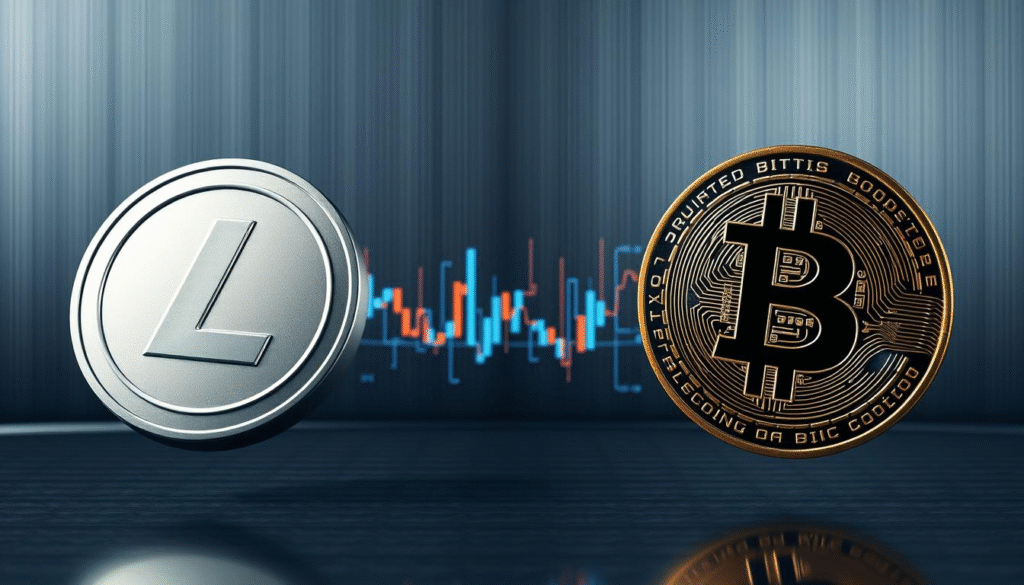
Litecoin and Bitcoin differ in several ways. Litecoin’s blocks are generated every 2.5 minutes, which is faster than Bitcoin’s 10 minutes. This means Litecoin can process transactions quicker.
Litecoin also uses the Scrypt hashing algorithm. This makes it harder for ASIC miners to dominate, unlike Bitcoin’s SHA-256 algorithm.
Litecoin has a total supply of 84 million, while Bitcoin’s supply is capped at 21 million. This difference in supply can affect their value and scarcity.
Market Position and Use Cases
Litecoin is great for small transactions and everyday use because of its fast processing and low fees. Bitcoin, on the other hand, is seen as a safe investment and a protection against inflation.
| Feature | Litecoin | Bitcoin |
| Block Generation Time | 2.5 minutes | 10 minutes |
| Total Supply | 84 million | 21 million |
| Hashing Algorithm | Scrypt | SHA-256 |
In summary, Litecoin and Bitcoin are both big names in the crypto world. But they differ in tech and market roles. Knowing these differences is key for anyone looking to invest or use these currencies.
How to Get Started with Litecoin
Starting your Litecoin journey is exciting. It opens up new possibilities in the world of cryptocurrency. First, you need to create a Litecoin wallet and get some coins.
Creating a Litecoin Wallet
A Litecoin wallet is key for storing, sending, and receiving Litecoin. There are many types of wallets. Each offers different security and convenience levels.
Hardware Wallets
Hardware wallets are physical devices that keep your Litecoin safe offline. They add an extra layer of security against hackers. Popular choices are Ledger and Trezor.
Software Wallets
Software wallets are apps for your computer or mobile device. They make managing your Litecoin easy and are often free.
Mobile Wallets
Mobile wallets are apps for smartphones. They let you manage your Litecoin anywhere. Examples include Litecoin Core and LoafWallet.
Purchasing Your First Litecoin
After setting up your wallet, you can buy Litecoin in several ways.
Using Cryptocurrency Exchanges
Cryptocurrency exchanges like Coinbase and Binance let you buy Litecoin with traditional currency or other cryptocurrencies.
Using Peer-to-Peer Platforms
Peer-to-peer platforms connect buyers and sellers directly. They often offer more flexible payment options.
Using ATMs and Other Methods
Litecoin ATMs and other methods, like online marketplaces, provide more ways to get Litecoin.
| Method | Convenience | Security |
| Cryptocurrency Exchanges | High | Medium |
| Peer-to-Peer Platforms | Medium | High |
| ATMs | High | Medium |
Litecoin Mining Explained
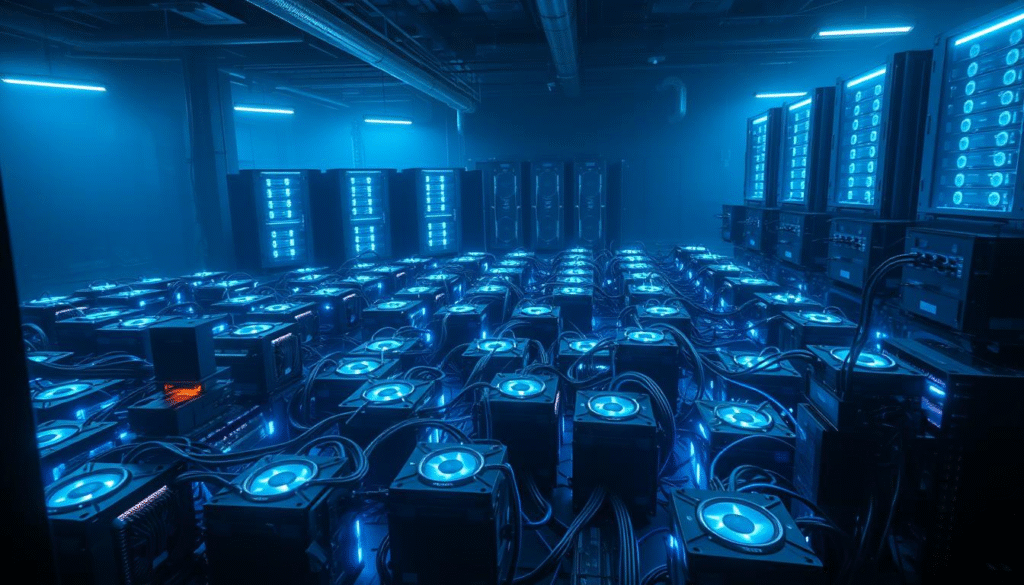
Litecoin mining adds new Litecoins to the system. It’s key to keeping the cryptocurrency decentralized. Miners use powerful computers to solve complex math problems. This secures the Litecoin network and checks transactions.
How Litecoin Mining Works
Miners solve complex algorithms to validate transactions and create new blocks. They compete to solve these algorithms first. The winner gets to add a new block to the blockchain and earns Litecoins.
This rewards miners and secures the network. It makes it hard for bad actors to change the blockchain.
Setting Up a Mining Operation
To mine Litecoin, you need to set up a mining operation. This includes getting the right hardware and software. The choice of setup affects mining profitability and efficiency.
Hardware Requirements
For Litecoin mining, you need specialized computers called ASICs. These are made for complex calculations. The right hardware boosts mining efficiency and profit.
Software Setup
You also need mining software to connect your hardware to the Litecoin network. It manages your mining operation. Popular software includes CGMiner and EasyMiner, which help optimize mining.
Mining Pools vs. Solo Mining
Miners can mine solo or join a mining pool. Solo mining is risky and less predictable. Mining pools combine resources, increasing the chance of solving algorithms and earning rewards.
Rewards are then split among pool members. This method offers more predictable income and reduced risk.
| Mining Method | Description | Advantages | Disadvantages |
| Solo Mining | Mining independently without joining a pool. | Full control over mining operation, potentially higher rewards. | Higher risk, less predictable income. |
| Mining Pools | Combining resources with other miners to increase chances of earning rewards. | More predictable income, reduced risk. | Rewards are split among pool members, pool fees. |
Trading and Investing in Litecoin
Litecoin has become a favorite in the cryptocurrency world. It’s known for quick transactions and low fees. This makes it a great option compared to other cryptos.
Market Analysis Techniques
To trade Litecoin well, you need to know about market analysis. Technical analysis looks at past prices and patterns to guess future trends. Fundamental analysis checks the factors that affect Litecoin’s value, like how widely it’s used and market trends.
- Tools like Moving Averages and Relative Strength Index (RSI) help spot trends.
- Fundamental analysis looks at Litecoin’s tech, demand, and competition.
Long-term vs. Short-term Strategies
Investors in Litecoin can pick between long-term and short-term plans. Long-term investing means holding onto Litecoin for a long time, hoping it will grow. Short-term trading is about buying and selling quickly to make money from small price changes.
“The key to successful investing is to have a clear understanding of your investment goals and risk tolerance.” – Anonymous Crypto Trader
Long-term investing can be stable and might grow a lot. Short-term trading can make money from quick price changes.
Securing Your Litecoin Assets
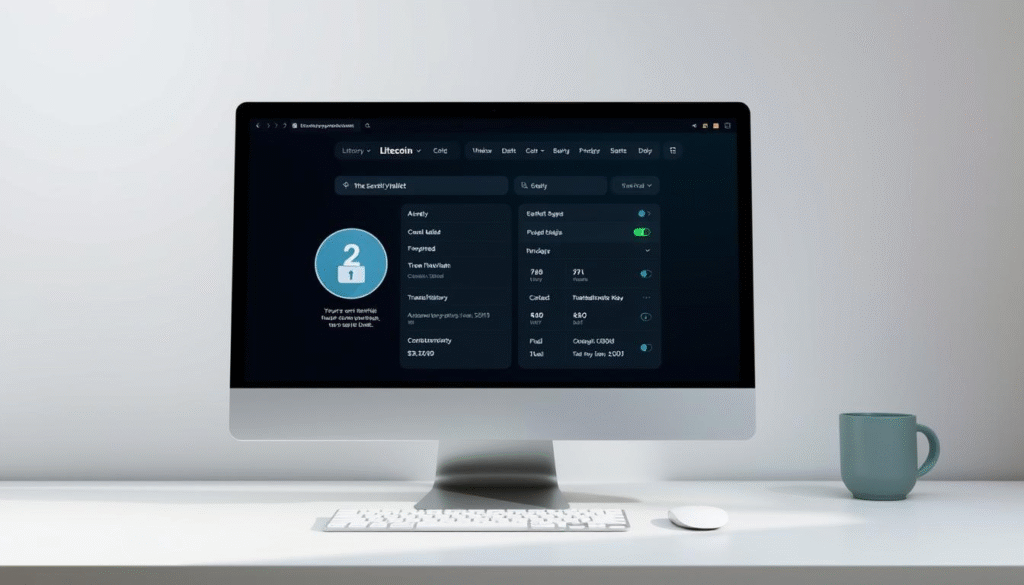
With the rise of cryptocurrency, keeping your Litecoin safe is key. You need to use secure wallets, watch out for scams, and follow security tips.
Best Practices for Wallet Security
First, pick a secure Litecoin wallet. Look for ones with two-factor authentication and multi-signature support. Also, update your wallet software regularly to avoid security issues.
Here’s a comparison of popular Litecoin wallets based on their security features:
| Wallet | Two-Factor Authentication | Multi-Signature Support |
| Wallet A | Yes | No |
| Wallet B | Yes | Yes |
| Wallet C | No | Yes |
Avoiding Common Scams and Pitfalls
Knowing about common scams is vital for keeping your Litecoin safe. Watch out for phishing attempts that try to steal your wallet info. Always check if websites and emails are real before sharing personal details.
Also, be careful of investment offers that seem too good to be true. They might be scams. Only use trusted exchanges and services. Never invest more than you can afford to lose.
Real-World Applications of Litecoin
Litecoin is more than just a digital currency. It’s used in everyday life because of its fast transactions and low fees. This makes it popular among both businesses and people.
Merchants Accepting Litecoin
More and more businesses are now accepting Litecoin. This includes online stores, travel agencies, and even some physical shops. The reasons are clear: it’s easy to use and doesn’t cost much.
- Online retailers like Amazon and eBay have started accepting Litecoin.
- Travel agencies are using Litecoin to make international payments easier.
Innovative Use Cases
Litecoin is also being used in new and exciting ways. It’s being explored for use in decentralized finance (DeFi) and for making cross-border payments.
| Use Case | Description |
| DeFi Platforms | Litecoin is being used in DeFi platforms for lending and borrowing. |
| Cross-Border Payments | Litecoin makes fast and cheap international payments, perfect for global trade. |
The Future of Litecoin
Litecoin’s path in the crypto market is shaped by tech innovation and market trends. As a well-known crypto, Litecoin keeps growing. It’s driven by its active community and the wider crypto trends.
Upcoming Technical Developments
Litecoin’s future is linked to its ongoing tech updates. Upcoming upgrades will boost its scalability, security, and ease of use. For example, faster block processing and better transaction efficiency will draw more users and merchants.
The team’s focus on continuous innovation keeps Litecoin competitive in the fast-changing crypto world.
Market Predictions and Adoption Trends
Litecoin’s future will also be influenced by market forecasts and adoption trends. As more people and businesses start using Litecoin, its value is expected to rise. Market analysis points to Litecoin’s price going up with growing adoption and positive market sentiment.
Litecoin’s success hinges on adapting to market changes and tech advancements. With a solid base and a proactive team, Litecoin is ready to seize new crypto market opportunities.
Conclusion
Litecoin is a cryptocurrency known for its speed and security. We’ve looked at its history and how it differs from Bitcoin. This shows Litecoin’s unique features.
Litecoin’s fast transactions and low fees make it appealing. As the crypto world grows, Litecoin’s future looks bright.
In summary, Litecoin is a solid cryptocurrency with a bright future ahead.
Sources
This article’s information comes from trusted sources. For more details, check out these resources:
Learn about Litecoin and blockchain at https://litecoin.org/. For deeper insights, visit Coindesk and CoinTelegraph.
Stay current with market trends on Investing.com and CNBC. They offer in-depth analysis of cryptocurrency markets, including Litecoin.
FAQ
What is Litecoin and how does it differ from Bitcoin?
Litecoin is a digital currency that works like Bitcoin but faster and cheaper. It’s great for quick transactions because it’s quicker and has lower fees.
How does Litecoin’s blockchain technology work?
Litecoin’s blockchain is a secure ledger for all transactions. It uses a special algorithm to keep the network safe and transactions verified.
What are the benefits of using Litecoin?
Litecoin is fast and cheap, making it perfect for quick transactions. It’s also secure and transparent, thanks to its decentralized nature.
How do I get started with Litecoin?
To start with Litecoin, create a wallet and buy some. You can buy it on sites like Coinbase or Binance.
What is Litecoin mining and how does it work?
Mining Litecoin means solving math problems to verify transactions. Miners use powerful computers and get new Litecoin as a reward.
How can I secure my Litecoin assets?
To keep your Litecoin safe, use a secure wallet and enable two-factor authentication. Keep your private keys safe and watch out for scams.
What are the real-world applications of Litecoin?
Litecoin is used by merchants and businesses for payments. It’s also used for new things like cross-border payments and micropayments.
What is the future of Litecoin?
The future of Litecoin looks bright with more adoption and new tech. Segregated Witness (SegWit) and the Lightning Network are key developments.
How does Litecoin compare to other cryptocurrencies?
Litecoin is compared to Bitcoin and Ethereum. It has its own features and advantages, making it unique.
Can I trade Litecoin on cryptocurrency exchanges?
Yes, you can trade Litecoin on exchanges like Coinbase, Binance, and Kraken.