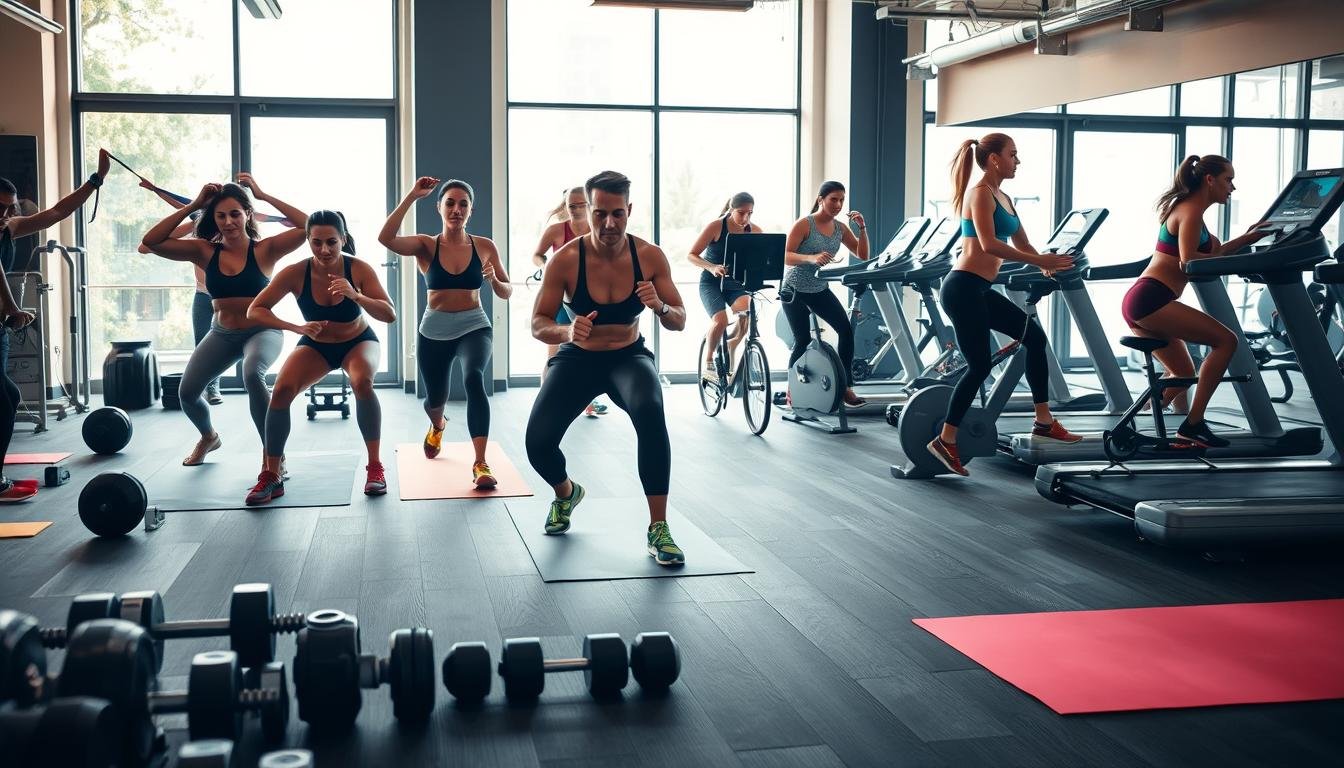
Regular physical activity is key for staying healthy. Sadly, 75% of adults in the United States don’t get enough exercise, says the Centers for Disease Control and Prevention.
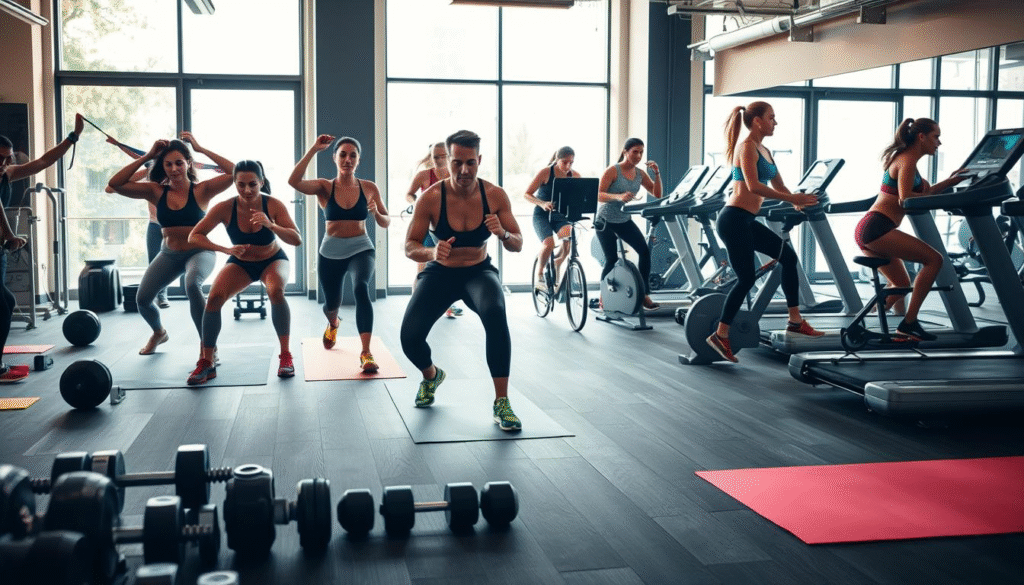
The National Institute on Aging recommends a mix of exercises. They suggest doing aerobic, muscle-strengthening, and balance workout routines for health. Doing different fitness activities boosts both body and mind health.
This article will look at the best exercises and activities for getting fit and healthy. We’ll give you a detailed look at the most effective workout routines.
Key Takeaways
- A combination of aerobic, muscle-strengthening, and balance exercises is recommended for overall health.
- Regular physical activity improves both physical and mental well-being.
- Engaging in various fitness activities can enhance overall fitness.
- A well-rounded workout routine includes a mix of different exercises.
- Consistency is key to achieving and maintaining fitness goals.
The Science Behind Effective Fitness
Fitness success comes from science. Studies prove that mixing aerobic, muscle-strengthening, and balance exercises is key. This mix boosts overall fitness and health.
How Different Workouts Impact Your Body
Workouts affect the body in unique ways. Cardio exercises like running or cycling make your heart stronger and increase stamina. Strength training builds muscle and speeds up metabolism. Knowing these differences helps create a good fitness plan.
Finding Your Optimal Exercise Intensity
Finding the right exercise intensity is important. It depends on your age, fitness level, and health. A good workout plan considers these to get the best results.
The Critical Role of Consistency
Consistency is essential in fitness. Regular exercise leads to better strength and endurance. It also keeps you motivated and helps reach long-term fitness goals.
| Workout Type | Primary Benefit | Example Exercises |
| Cardio Exercises | Improved Heart Health | Running, Cycling, Swimming |
| Strength Training | Increased Muscle Mass | Weightlifting, Resistance Band Exercises |
| Balance Exercises | Enhanced Coordination | Yoga, Tai Chi, Balance Boards |
Best Cardio Exercises for Fat Burning
To lose fat, you need the right cardio exercises. These workouts raise your heart rate and boost your heart health. This helps burn calories and fat.
High-Intensity Interval Training (HIIT)
High-Intensity Interval Training (HIIT) is great for burning fat and improving heart health. It involves short, intense exercises followed by brief rests.
Benefits and Effectiveness
HIIT burns more calories, boosts your metabolism, and improves your heart health. A study in the Journal of Sports Science and Medicine shows HIIT is effective for fat loss. It does this by burning lots of calories and having an afterburn effect.
“HIIT is a game-changer for those looking to maximize their fat loss in minimal time.”
– Fitness Expert
Top HIIT Workout Routines
Top HIIT routines include sprint intervals, burpees, jump squats, and mountain climbers. These can be adjusted to fit your fitness level and goals.
Who Should Try HIIT
HIIT is great for those wanting a tough and quick workout. But, always talk to a doctor before starting, even more so if you have health issues.
Steady-State Cardio Options
Steady-state cardio keeps your heart rate steady for a longer time. It’s good for your heart and burns calories.
Running and Jogging Benefits
Running and jogging are top choices for steady-state cardio. They’re good for your heart, mood, and calorie burn.
Cycling for All Fitness Levels
Cycling is versatile and fits all fitness levels. It’s easy on the joints, making it perfect for those with joint problems.
Swimming as Low-Impact Cardio
Swimming works your whole body without straining your joints. It’s a great choice for low-impact cardio.
Recommended Cardio Equipment
For home or gym workouts, there’s great cardio equipment. Treadmills, stationary bikes, and ellipticals are popular.
Good cardio equipment can make your workouts better and more varied. Pick what fits your goals and likes.
Strength Training Exercises for Muscle Development
Effective strength training mixes compound and isolation exercises. This mix helps build muscle and improve fitness.
Compound Movements for Maximum Results
Compound movements work many muscles at once. They’re great for building muscle and strength.
Squats and Deadlifts Technique
Squats and deadlifts are top compound exercises. Proper form is key to avoid injury and get the best results. For squats, keep your back straight and lower until your thighs are almost touching the ground. For deadlifts, bend at the hips and lift with your legs and back.
Bench Press and Overhead Press Form
The bench press and overhead press build upper body strength. Focus on controlled movements and keep your back straight during the bench press. For the overhead press, press the barbell straight up over your head.
Isolation Exercises for Targeted Growth
Isolation exercises focus on specific muscles. They help with muscle balance and definition.
Pros and Cons
Isolation exercises are great for targeted muscle growth. But, they might not build overall strength like compound exercises. They’re good for rehab and muscle shaping.
Best Isolation Movements
- Bicep curls for arm development
- Tricep extensions for the back of the arms
- Leg curls and leg extensions for leg development
Essential Strength Equipment Review
The right equipment can boost your workout. Knowing your options helps make better choices.
Free Weights vs. Machines
Free weights, like dumbbells and barbells, are versatile and work stabilizer muscles. Machines are safer for beginners and guide movements.
Budget-Friendly Options
For those watching their budget, try resistance bands and adjustable dumbbells. They’re affordable and versatile, fitting many exercises.
Bodyweight Exercises for Home Workouts
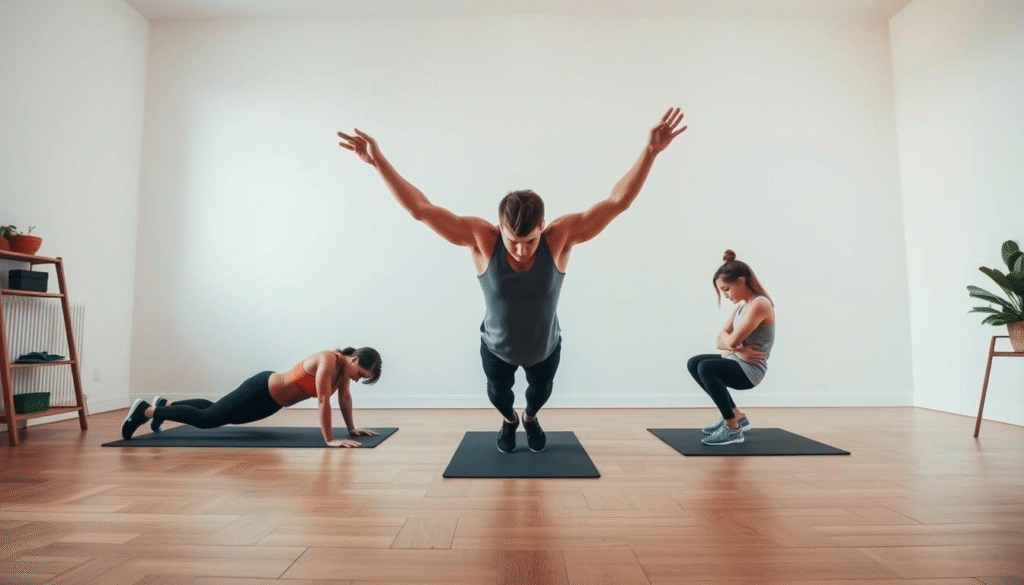
Bodyweight exercises are a great way to stay fit without any equipment. You can do them anywhere, perfect for home workouts or traveling. They use your body weight as resistance to build strength and improve flexibility.
No-Equipment Routines That Work
Bodyweight exercises need little to no equipment, making them easy for everyone. You can do a variety of movements to target different muscles.
Push-Up Variations
Push-ups are a classic exercise that work the chest, shoulders, and triceps. Try diamond push-ups, decline push-ups, and plyometric push-ups to mix up your workout and challenge your muscles.
Squat and Lunge Progressions
Squats and lunges are key for your lower body. Try single-leg squats, sumo squats, and walking lunges to boost balance, strength, and flexibility.
Progression Techniques for Continued Results
To keep improving with bodyweight exercises, use progression techniques. Increase reps, change body angles, or add isometric holds to your routine.
Common Mistakes and Corrections
Don’t let common mistakes like bad form, short range of motion, or skipping warm-ups hold you back. Focus on proper technique, engage your core, and warm up before starting.
Flexibility and Mobility Workouts
Flexibility and mobility are key for a balanced exercise program. They help you move better and put less stress on your muscles and joints. Adding flexibility and mobility workouts to your routine boosts your athletic skills and lowers injury risks.
Dynamic Stretching Benefits
Dynamic stretching moves your joints and keeps your muscles working. It boosts your flexibility and gets your muscles ready for exercise. Leg swings, arm circles, and hip rotations are good examples.
Yoga Poses for Athletes
Yoga is great for any fitness activity routine. It improves flexibility, balance, and strength. Poses like downward-facing dog, warrior II, and tree pose can help athletes perform better and feel less muscle tension.
Mobility Drills for Joint Health
Mobility drills help your joints move better. They keep your joints healthy and prevent injuries. Focus on your hips, shoulders, and knees.
Hip Mobility Exercises
Hip mobility is essential for full movement in physical exercises. Try hip circles, lateral leg swings, and pigeon pose to improve your hip flexibility.
Shoulder Mobility Routines
Exercises for your shoulders prevent injuries and keep them healthy. Arm circles, shoulder rolls, and wall slides boost your shoulder flexibility and mobility.
By adding these exercise programs to your routine, you’ll see better flexibility, mobility, and physical performance.
Most Effective Exercises for Weight Loss
To lose weight well, focus on exercises that burn calories and boost your metabolism. The right workout routines can greatly help your weight loss journey.

High-Calorie-Burning Workout Combinations
Mixing different exercises can burn more calories and help you lose weight better. For example, High-Intensity Interval Training (HIIT) is short bursts of hard exercise with brief rests. It’s very good at burning calories.
- Burpees: A full-body exercise that combines strength and cardio.
- Jump Squats: Excellent for burning calories and strengthening legs.
- Mountain Climbers: Engages core and improves cardiovascular fitness.
The Exercise-Nutrition Connection
Exercise is key for weight loss, but a healthy diet is just as important. Good nutrition gives your body the fuel it needs for workouts and helps with recovery.
| Exercise Type | Caloric Burn | Nutritional Focus |
| Cardio | High | Carbohydrates |
| Strength Training | Moderate to High | Protein |
| HIIT | Very High | Balanced Macronutrients |
Creating a Sustainable Weight Loss Plan
A good weight loss plan needs regular exercise and a balanced diet. It’s key to set achievable goals and slowly increase workout intensity and frequency.
Workout Frequency Recommendations
Try to do at least 150 minutes of moderate-intensity exercise or 75 minutes of vigorous-intensity exercise per week. You can mix both types of activities.
Intensity vs. Duration Analysis
The intensity and length of workouts greatly affect weight loss. Higher intensity workouts burn more calories in less time. Longer, moderate workouts also work well.
Core-Strengthening Exercises for Functional Fitness
Core-strengthening exercises are key for better functional fitness and health. A strong core helps with stability, balance, and power. This makes daily tasks and sports better.
Beyond Traditional Ab Workouts
While crunches and sit-ups are good, core exercises do more. They work the whole core, including the obliques and lower back.
Effective core exercises use dynamic movements. These movements challenge the core in new ways, boosting fitness.
Plank Variations and Progressions
Planks are a core exercise favorite. Side planks, plank jacks, and dynamic planks add variety. They help avoid plateaus and prevent injuries.
Functional Core Training Benefits
Functional core training has many benefits. It improves sports performance and prevents injuries. A strong core makes complex movements easier.
Sports Performance Enhancement
For athletes, a strong core is vital. It boosts power, stability, and endurance in sports.
Injury Prevention Aspects
A strong core also prevents injuries. It stabilizes the body and supports good movement. This reduces the risk of strains and injuries.
Adding core-strengthening exercises to your exercise programs boosts fitness. Whether you’re an athlete or just want to be more functional, a strong core is essential.
Designing Your Personalized Exercise Program
To get the most out of your exercise, tailor it to your needs. A good workout routine fits your fitness level, goals, and lifestyle. It’s not a one-size-fits-all solution.
Assessing Your Current Fitness Level
Before starting any new exercise program, assess your current fitness level. Look at your cardiovascular health, strength, flexibility, and body composition. A healthcare professional or certified fitness trainer can help with this.
Setting Achievable Fitness Goals
Setting clear, achievable fitness goals is key. Your goals should be specific, measurable, attainable, relevant, and time-bound (SMART). For example, aim to lose a certain amount of weight or improve your running distance.
Sample Weekly Workout Schedules
A well-structured workout schedule is essential for success. Here are weekly workout routines for different fitness levels:
Beginner-Friendly Routines
Beginners or those returning to exercise should start with a beginner-friendly routine. This includes 3 days of cardio and 2 days of strength training, with a rest day in between.
Intermediate Program Design
Once you’ve built a fitness base, move to more challenging workouts. An intermediate program includes 4-5 days of training, mixing cardio, strength, and flexibility.
Advanced Training Splits
Advanced individuals can use training splits to focus on specific muscle groups or fitness components. This might mean dividing your workout into upper/lower body days or dedicating specific days to strength, cardio, and flexibility.
| Fitness Level | Workout Frequency | Example Routine |
| Beginner | 3-4 times/week | Cardio (30 mins) + Strength Training |
| Intermediate | 4-5 times/week | Mix of Cardio, Strength, and Flexibility |
| Advanced | 5-6 times/week | Training Splits (e.g., Upper/Lower Body) |
As Arnold Schwarzenegger once said,
“The last three or four reps is what makes the muscle grow.”
This shows the importance of pushing yourself in workouts for real results.

By following these guidelines and tailoring your exercise program, you can achieve a more effective and sustainable fitness journey.
Conclusion
Getting fit and healthy takes time and effort. A good fitness plan includes many effective exercises and workout routines for different goals.
“The only bad workout is the one that didn’t happen.” This quote shows how important it is to keep exercising regularly. It’s not just about what exercises you do, but also about doing them every day.
To reach your fitness goals, mix effective exercises with a steady workout plan. This not only improves your body but also your mind. Learning to be patient and persistent helps you stick to a fitness plan that works for the long haul.
In short, fitness is a long journey that needs commitment and hard work. Adding cardio, strength training, and flexibility to your routines will help you reach your goals. Always remember, consistency and patience are key to success in fitness.
“Success is the sum of small efforts, repeated day in and day out.” This quote shows the power of regular effort in reaching fitness goals through exercises and routines.
Sources
This article’s information comes from trusted sources. It ensures the content is accurate and reliable.
The following sources were used:
- National Institute on Aging: Exercise and Physical Activity
- Harvard Health Publishing: Benefits of Bodyweight Exercises
- American Council on Exercise: Effective Exercises for Weight Loss
These sources offer evidence-based info on exercise and physical activity. They support the recommendations in this article.
FAQ
What are the most effective exercises for weight loss?
HIIT and strength training are top choices for losing weight. Try burpees, jump squats, and mountain climbers too.
How often should I do cardio exercises for fat burning?
Aim for 150 minutes of moderate cardio or 75 minutes of vigorous cardio weekly. Each session should last at least 20 minutes.
What is the best strength training equipment for muscle development?
Dumbbells, kettlebells, and resistance bands are key. They let you do squats, deadlifts, and bench press to work out different muscles.
Can I do bodyweight exercises at home without any equipment?
Yes, you can do push-ups, squats, and lunges at home. Increase reps or sets to keep seeing results.
How do I create a sustainable weight loss plan?
Mix regular exercise, healthy eating, and lifestyle changes for lasting weight loss. Aim for a caloric deficit and eat nutrient-rich foods. Stay hydrated too.
What are the benefits of flexibility and mobility workouts?
Workouts like dynamic stretching and yoga boost range of motion and reduce injury risk. They also improve athletic performance.
How do I design a personalized exercise program?
Start by checking your fitness level and setting goals. Then, plan a weekly workout schedule. Include cardio, strength training, and flexibility exercises.
What is the importance of consistency in achieving fitness goals?
Being consistent is key to reaching fitness goals. Regular exercise and healthy habits build momentum and support long-term success.
How can I incorporate strength training into my workout routine?
Add exercises like squats, deadlifts, and bench press to your routine. Aim for 2-3 strength training sessions weekly, focusing on different muscles each time.