
Over 70% of businesses are expected to adopt blockchain technology by 2025, according to a recent survey. This rapid adoption is driven by the need for decentralized, transparent, and tamper-proof solutions across various industries.

The decentralized nature of blockchain innovation allows for secure and efficient data management. It reduces the risk of data breaches and cyber attacks. As a result, industries such as finance, healthcare, and supply chain management are leveraging blockchain applications. They aim to streamline operations and improve customer trust.
Key Takeaways
- Blockchain technology adoption is expected to increase significantly by 2025.
- Decentralized solutions offer enhanced security and transparency.
- Various industries are leveraging blockchain applications to improve operations.
- Blockchain innovation is driving efficiency and customer trust.
- Blockchain technology is transforming industries beyond finance.
The Evolution of Blockchain Technology
The journey of blockchain technology has been nothing short of remarkable. It has evolved from a simple cryptocurrency framework to complex enterprise solutions. This evolution is a result of advancements in blockchain technology, enabling it to support a wide range of applications beyond cryptocurrency.
From Bitcoin to Enterprise Solutions
Initially, blockchain technology was closely tied to Bitcoin, a cryptocurrency that utilized a decentralized ledger for transactions. As the technology evolved, its enterprise applications became clear. Today, blockchain is being adopted across various sectors, including finance, healthcare, and supply chain management. It enhances transparency, security, and efficiency.
A leading expert noted, “Blockchain is not just about cryptocurrency; it’s about creating a new paradigm for business operations.” This shift is evident in the growing number of enterprises exploring blockchain solutions to streamline their processes.
Key Milestones in Blockchain Development
Several key milestones have marked the evolution of blockchain technology. The development of smart contracts on platforms like Ethereum has been a significant advancement, enabling automated business processes. Other notable developments include the expansion of blockchain into new sectors and the establishment of industry standards for blockchain interoperability.
The journey of blockchain technology from its cryptocurrency roots to its current status as a versatile enterprise tool highlights its immense promise. As blockchain continues to evolve, we can expect to see even more innovative applications emerge.
Understanding Blockchain Technology Fundamentals
Grasping blockchain starts with understanding its core elements: decentralization, consensus, and security. These components combine to form a strong, transparent system.
Decentralized Ledger Architecture
A decentralized ledger is a shared database across multiple sites or geographies. It records transactions on a network of computers, avoiding single entity control. This setup boosts blockchain security by removing a single failure point.

Consensus Mechanisms Explained
Consensus mechanisms are key for validating transactions on blockchain networks. Methods like proof-of-work and proof-of-stake ensure network agreement on blockchain state, blocking fraud. These are essential for blockchain integrity.
Blockchain Security Features
Blockchain security is strengthened by its decentralized structure and cryptography. Its immutable nature means transactions can’t be altered once recorded. This ensures high security and transparency, appealing to many industries.
Top Blockchain Platforms Review
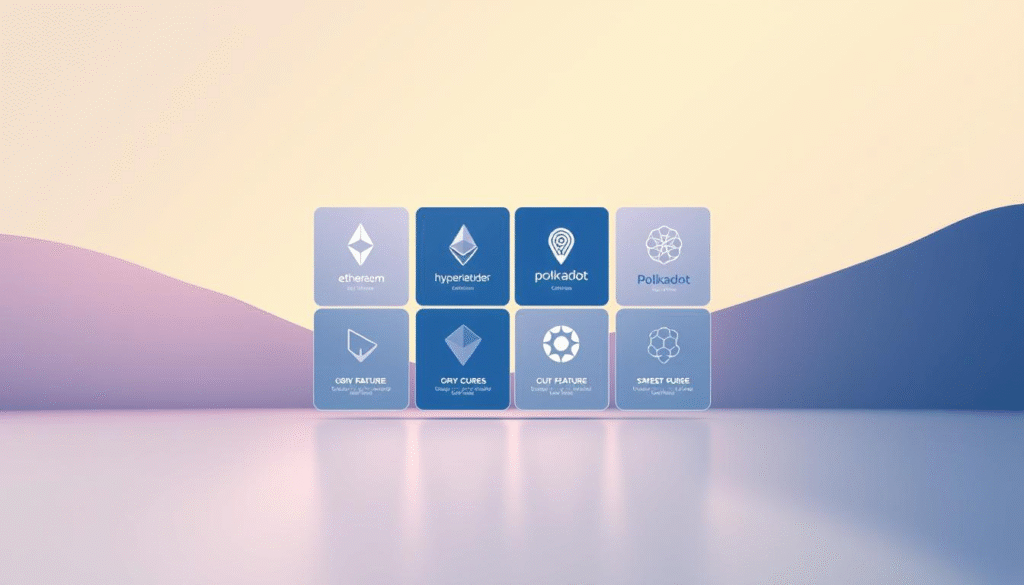
Blockchain technology has evolved, leading to the emergence of several prominent platforms. Each platform boasts unique strengths and weaknesses. This section delves into the top blockchain platforms, including Ethereum, Hyperledger Fabric, Solana, and Polkadot. We’ll explore their features, advantages, and disadvantages.
Ethereum
Overview
Ethereum stands out as a leading blockchain platform, celebrated for its smart contract functionality and support for decentralized applications (dApps). It boasts a large developer community and a robust ecosystem.
Pros
- Established Ecosystem: Ethereum’s vast and established ecosystem supports numerous dApps and a substantial user base.
- Smart Contract Support: It enables complex smart contracts, facilitating a broad spectrum of decentralized applications.
Cons
- Scalability Issues: Ethereum faces scalability challenges, resulting in high transaction fees during peak usage.
- Transition to Ethereum 2.0: The platform is undergoing a significant upgrade to Ethereum 2.0, which may cause uncertainty.
Hyperledger Fabric
Overview
Hyperledger Fabric is a permissioned blockchain platform tailored for enterprise use cases. It is renowned for its scalability, security, and flexibility.
Pros
- Enterprise-Grade: Hyperledger Fabric is designed for enterprise applications, providing high scalability and security.
- Permissioned Network: It allows for permissioned networks, which enhances privacy and control.
Cons
- Complexity: Setting up and managing Hyperledger Fabric can be complex due to its enterprise features.
- Limited Public Use: As a permissioned blockchain, it’s less suitable for public, decentralized applications.
Solana
Overview
Solana is a fast and scalable blockchain platform that supports a wide range of applications, from DeFi to NFTs. It’s known for its high transaction throughput and low fees.
Pros
- High Scalability: Solana offers high scalability with fast transaction processing times.
- Low Fees: It has low transaction fees, making it attractive for users and developers.
Cons
- Centralization Concerns: There are concerns about the centralization of Solana’s network.
- Newer Platform: As a relatively new platform, Solana’s long-term viability and security are yet to be fully tested.
Polkadot
Overview
Polkadot is a multi-chain blockchain platform that enables interoperability between different blockchain networks. It’s designed to support a wide range of applications and use cases.
Pros
- Interoperability: Polkadot enables interoperability between different blockchain networks, enriching functionality and usability.
- Scalability: It is designed to be highly scalable, supporting a large number of transactions.
Cons
- Complexity: Polkadot’s architecture can be complex, potentially creating a barrier to entry for new users and developers.
- Relay Chain Dependency: The platform’s parachains depend on the relay chain, which can be a single point of failure.
Smart Contracts: Automating Business Processes
Blockchain technology is revolutionizing business processes through smart contracts. These self-executing contracts have their terms encoded in code. They automate tasks by executing actions based on conditions, boosting efficiency and cutting out intermediaries.
Functionality
Smart contracts operate on if-then logic, enabling automated decision-making. They manage the negotiation or execution of contracts, playing a key role in blockchain innovation. Their use can significantly enhance business operations, bringing about transparency, cost savings, and security improvements.
Leading Smart Contract Development Tools
Several tools aid in the creation, testing, and deployment of smart contracts. These include:
- Truffle Suite: A well-liked framework for Ethereum smart contract development.
- Remix IDE: A browser-based IDE for writing, debugging, and deploying smart contracts.
- Hardhat: An Ethereum development environment known for its flexibility and extensibility.
Truffle Suite
Truffle Suite is celebrated for its extensive toolset for smart contract developers. It encompasses Truffle, a development environment and testing framework; Ganache, a personal Ethereum blockchain; and Drizzle, front-end libraries for blockchain application interfaces.
Remix IDE
Remix IDE stands out as a robust tool for smart contract development. It provides a user-friendly interface for coding, debugging, and deployment, appealing to both novices and seasoned developers.
Hardhat
Hardhat is a versatile Ethereum development environment. It facilitates the compilation, testing, and deployment of smart contracts, along with debugging and performance analysis. Its plugin architecture ensures customization, meeting diverse developer needs.
Blockchain in Financial Services
Blockchain’s influence on finance is significant, bringing about better security and transparency. It’s gaining traction in banking, insurance, and investment/trading sectors. This technology is reshaping how financial services operate.
Banking Applications
In banking, blockchain boosts transaction efficiency and cuts costs. It enables real-time settlement, improving liquidity management. A report suggests blockchain could save banks up to $12 billion in infrastructure costs by 2025.

Insurance Solutions
Blockchain is changing insurance by enhancing transparency and reducing fraud. It introduces smart contracts for automated claims processing, boosting customer satisfaction. This reflects the industry’s belief in blockchain’s transformative power.
“Blockchain technology has the power to revolutionize the insurance sector, making it more efficient and transparent.”
– A sentiment shared by many in the industry regarding blockchain’s impact.
Investment and Trading Platforms
In investment and trading, blockchain ensures secure and transparent transactions. It enables the tokenization of assets, simplifying trading and investment in diverse assets. This innovation is poised to create new opportunities for investors and increase market liquidity.
Supply Chain Transformation Through Blockchain
Blockchain is revolutionizing supply chains, bringing unparalleled transparency and accountability. It’s being widely adopted across industries to improve supply chain operations. This ensures products are genuine, traceable, and managed efficiently.
Traceability Solutions Review
Traceability is key in supply chain management, and blockchain is a major breakthrough. VeChain and IBM Food Trust lead this transformation.
VeChain
VeChain is a blockchain platform focused on supply chain management. It offers a strong solution for tracking and verifying products. This technology guarantees products are authentic and traceable to their origin.
IBM Food Trust
IBM Food Trust uses blockchain to boost food safety and traceability. It enables real-time tracking of food products. This reduces contamination risks and speeds up recalls when needed.
Inventory Management Systems
Blockchain is also changing inventory management, making it transparent and efficient. It helps avoid overstocking or understocking. This streamlines the supply chain, making it more adaptable to demand changes.
Key benefits of blockchain in inventory management include better accuracy, lower costs, and clearer supply chain visibility.

Healthcare Industry Applications
The integration of blockchain in healthcare is transforming patient data management and pharmaceutical tracking. It uses a decentralized ledger to secure patient records. These records are tamper-proof and accessible to those with the right permissions.
Patient Data Management Platforms
Blockchain-based platforms are changing how medical records are managed. They enable secure storage and efficient sharing of patient data. This improves care coordination and patient outcomes.
For example, a patient’s medical history can be updated in real-time. This ensures healthcare providers have the latest information.
Pharmaceutical Supply Chain Solutions
Blockchain technology is also used to track pharmaceuticals in the supply chain. It significantly reduces the risk of counterfeit drugs. By creating an immutable record of transactions, from manufacturer to consumer, blockchain ensures authenticity.
This protects consumers and maintains the integrity of the pharmaceutical supply chain.
Enterprise Blockchain Solutions Comparison
Enterprise blockchain solutions are transforming business operations, with IBM and Microsoft leading the charge. As blockchain technology gains traction, the need for scalable and robust platforms has grown. This has prompted the creation of various enterprise blockchain platforms.
IBM Blockchain Platform
The IBM Blockchain Platform uses Hyperledger Fabric to create a secure, scalable blockchain environment. It’s tailored for enterprise needs, featuring:
- Permissioned blockchain network
- Smart contract support
- Integration with existing infrastructure
Features
IBM Blockchain Platform boasts enhanced security and scalability. It supports smart contracts, enabling the automation of complex processes.
Recommendations
IBM Blockchain is suited for enterprises needing high security and scalability. A leading logistics company has found it transformative for supply chain management.
“IBM Blockchain has been a game-changer for our supply chain management,”
they said.
Microsoft Azure Blockchain Service
Microsoft Azure Blockchain Service is a fully managed platform for deploying and managing blockchain networks. It supports Ethereum and Corda blockchain protocols.
Features
Azure Blockchain Service offers automated deployment and integrated monitoring. It also has a consortium management feature for collaborative networks.
Recommendations
Azure Blockchain Service is perfect for businesses in the Microsoft ecosystem. It offers seamless integration and scalability.
Amazon Managed Blockchain
Amazon Managed Blockchain is a fully managed service for creating and managing scalable blockchain networks. It supports Hyperledger Fabric and Ethereum frameworks.
Features
Amazon Managed Blockchain features easy network setup and robust security. It also integrates well with AWS services, benefiting businesses using AWS.
Recommendations
Amazon Managed Blockchain is ideal for businesses seeking scalable, secure blockchain solutions that integrate with AWS.
Oracle Blockchain Platform
Oracle Blockchain Platform is designed for secure, scalable blockchain environments for enterprises. It offers high-performance blockchain and integrated analytics.
NFT and Digital Asset Platforms
The emergence of NFT platforms has transformed digital ownership. Platforms like OpenSea, Rarible, and NBA Top Shot are redefining our understanding of digital assets.
OpenSea
OpenSea stands as a leading NFT marketplace, featuring a diverse array of digital assets, from art to collectibles.
Overview
It enables users to engage in buying, selling, and trading NFTs across multiple blockchains, including Ethereum and Polygon.
Pros
- Wide selection: OpenSea boasts a vast collection of NFTs.
- Multi-chain support: It facilitates transactions on various blockchains.
Cons
- High transaction fees: Gas fees on Ethereum can be very high.
- Complex interface: The platform might overwhelm new users.
Rarible
Rarible is a community-driven NFT marketplace that empowers creators to mint and sell their digital assets.
Overview
It provides a platform for artists and collectors to create, buy, and sell NFTs.
Pros
- Community-driven: Rarible fosters a vibrant community of creators.
- EASY minting process: Artists can easily mint NFTs.
Cons
- Quality control issues: The platform’s openness can result in variable quality.
- Potential for copyright issues: Users must be vigilant about copyright infringement.
NBA Top Shot
NBA Top Shot is an officially licensed NFT platform that offers unique digital collectibles related to NBA highlights.
Overview
It allows fans to collect and trade officially licensed NBA moments as NFTs.
Pros
- Officially licensed: NBA Top Shot provides authentic NBA content.
- User-friendly interface: The platform is easy to navigate.
Cons
- Limited to NBA content: The platform focuses only on NBA-related NFTs.
- Transaction fees: While not as high as Ethereum, fees can apply.
Conclusion: The Future of Blockchain Innovation
Blockchain technology is poised to enter a new era, promising to transform industries and open up new opportunities. This article has highlighted blockchain’s decentralized ledger, secure consensus mechanisms, and smart contracts. These features have significant implications across various sectors.
The outlook for blockchain innovation is promising, with finance, supply chain, and healthcare already seeing major changes. Blockchain-based systems are boosting traceability, security, and efficiency in these fields.
- Enhanced security through decentralized consensus mechanisms
- Increased transparency and trust in transactions
- Improved efficiency through automated smart contracts
As blockchain technology advances, we can anticipate new applications and use cases. The scope for growth and transformation is immense. It will be thrilling to observe how blockchain innovation molds the future.
Sources
Exploring blockchain technology required consulting a range of sources. These included research papers, industry reports, and technology news articles. These blockchain sources offered deep insights into its development and applications.
Some key references include:
- IBM Blockchain
- CoinDesk
- Hyperledger
- Ethereum
These references are a treasure trove of information on blockchain technology. They cover its evolution and its uses in various industries. Readers can use these resources to enhance their knowledge and stay current with the latest blockchain advancements.
FAQ
What is blockchain technology, and how does it work?
Blockchain technology is a decentralized ledger system that records transactions across a network of computers. It employs advanced cryptography and consensus mechanisms to secure and validate transactions. This makes it a secure and transparent method for conducting business.
What are the benefits of using blockchain in financial services?
Blockchain in financial services brings several benefits. It enhances security, increases transparency, and improves efficiency. It also reduces costs and enables faster settlement times. These advantages make it attractive for banks, insurance companies, and investment/trading platforms.
How does blockchain technology improve supply chain management?
Blockchain technology improves supply chain management by increasing traceability and transparency. It allows for real-time tracking of goods, reducing counterfeiting risks. It also enhances inventory management, simplifying complex global supply chains.
What are smart contracts, and how do they automate business processes?
Smart contracts are self-executing contracts with terms written in code. They automate business processes by executing specific actions when conditions are met. This reduces the need for intermediaries and increases efficiency.
What is the role of NFTs in the digital asset market?
NFTs, or non-fungible tokens, play a significant role in the digital asset market. They provide a unique and verifiable way to represent ownership of digital assets, such as art and music. They are created and traded on NFT marketplaces like OpenSea and Rarible.
How does blockchain technology enhance data privacy and security in healthcare?
Blockchain technology enhances data privacy and security in healthcare by providing a secure, decentralized way to store and manage patient data. It can also track pharmaceuticals through the supply chain, reducing counterfeit drug risks.
What are the key differences between public and private blockchain networks?
Public blockchain networks, like Ethereum, are open and decentralized, allowing anyone to participate. Private blockchain networks are restricted to specific users and are often used in enterprise settings. Private blockchains offer greater control and security but lack the decentralization and transparency of public blockchains.
What are some of the top blockchain platforms, and what are their unique features?
Top blockchain platforms include Ethereum, Hyperledger Fabric, Solana, and Polkadot. Each platform has unique features. Ethereum supports smart contracts, Hyperledger Fabric focuses on enterprise architecture, Solana offers high performance, and Polkadot enables interoperability.